In industrial imaging, lens distortions like blurriness or warped shapes can hinder defect detection and measurement accuracy. Traditional calibration is time-consuming and slows production. AI-driven calibration now automatically learns from real-time images to correct these errors, improving accuracy, saving time, and reducing costs. This technology allows operators to achieve better results without lengthy manual adjustments.

What is Distortion
Lens distortion is such as barrel, pincushion or mustache distortion alters the shape of captured images, causing straight lines to curve or objects to appear the wrong size. In industrial imaging, even small distortions can lead to measurement errors, false defect detection, and quality control issues. Traditional correction uses calibration grids or software, but AI can now analyze images in real time, learn distortion patterns, and automatically adjust settings. This ensures accurate measurements, reduces errors, and improves precision in inspections, making industrial imaging more reliable.
Impact on Detection Accuracy
Lens distortion in industrial imaging can cause false defect detection or missed flaws, leading to wasted materials, rework, and production delays. Even slight warping affects measurements critical in precision manufacturing, such as PCB spacing or metal sheet widths. Traditional calibration methods are time-consuming and may not adapt to changing conditions. AI-driven correction now analyzes real-time images, learning distortion patterns and automatically adjusting settings. This improves accuracy, reduces errors, and keeps production running efficiently, ensuring machines detect defects and measure parts correctly.
Principles and Advances in AI Correction
AI correction for lens distortion enables industrial imaging systems to automatically adjust images so they accurately reflect reality. By learning predictable distortion patterns—like barrel, pincushion, or mustache distortion—from calibration images, AI can apply real-time corrections even on unseen images. Modern deep learning algorithms handle high-resolution images quickly, supporting fast production lines and integrating with multiple cameras or inspection software. Practical applications include electronics assembly, packaging, and metal fabrication, where AI ensures accurate measurements and defect detection. Overall, AI adapts to changes, reduces manual calibration, and keeps inspection systems reliable and precise.

Industrial Application Examples
AI-driven lens correction is improving industrial inspection across multiple sectors. In electronics, it ensures PCBs are inspected accurately despite tiny components packed closely together. In packaging, it corrects distortions on curved surfaces like bottles or pouches, reducing false defect reports. Metal fabrication benefits from precise imaging of large or reflective parts, enabling accurate measurements and defect detection. Automotive inspections of panels, paint, and displays also see improved accuracy. By correcting lens distortions in real time, AI allows machines to inspect products consistently and precisely, reducing errors, waste, and downtime while keeping production efficient.
CHIOPT Technical Advantages
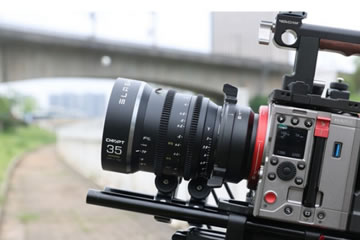
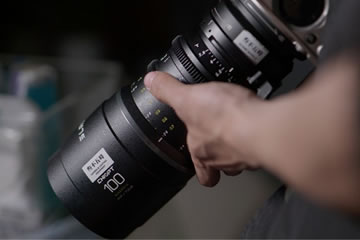
CHIOPT lenses are popular in industrial imaging because they combine high optical quality with practical design features that simplify AI-driven distortion correction. They maintain sharp focus across the entire image, work seamlessly with high-resolution sensors (4K–16K), and perform reliably in challenging environments with vibrations, temperature changes, or dust. With a variety of focal lengths and fields of view, CHIOPT lenses can be tailored to inspect small components or large parts. Paired with AI, they provide clear, consistent images that improve defect detection accuracy, reduce calibration needs, and keep inspections fast and precise across different industrial applications.
0 Comments